
Case Study · Financial Services
Tardi Group: from WordPress brochure to client acquisition platform
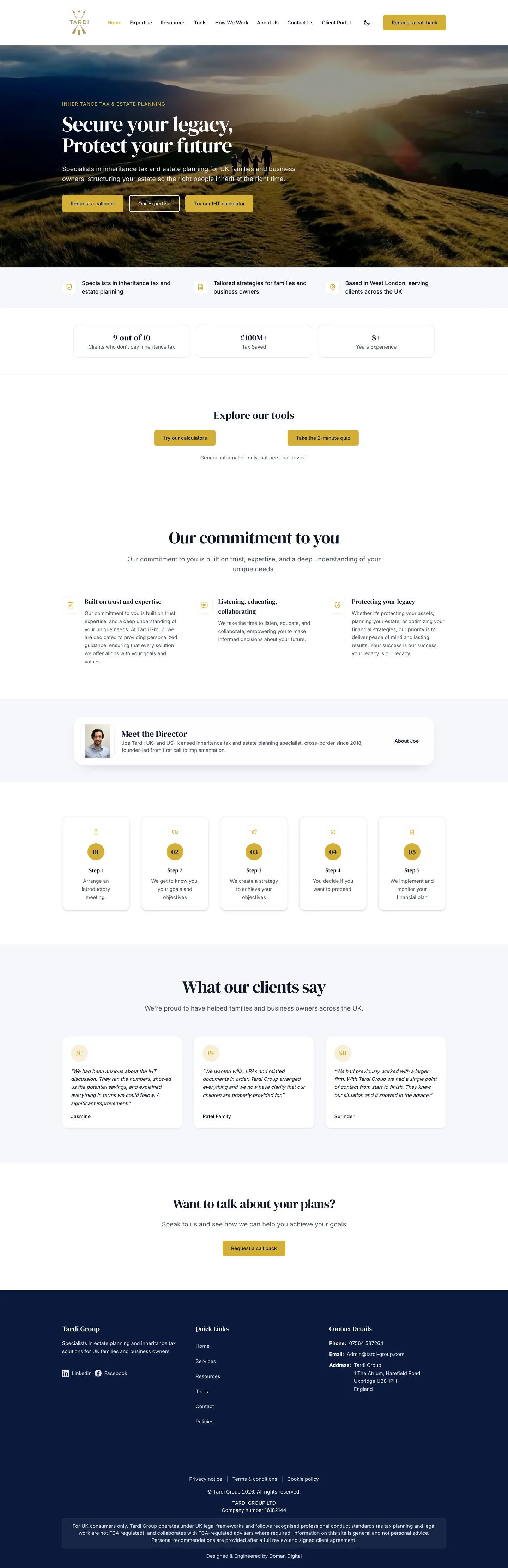
Tardi Group is a UK inheritance tax and estate planning specialist for high-net-worth families and business owners. When they came to Doman Digital, they had a WordPress site that ranked but did not convert. The rebuild had one job: make the expertise legible, build trust fast, and give every visitor a clear next step.
Homepage, rebuilt around what a prospective client actually needs to see
At a glance
Site role
From brochure to client acquisition platform
Service model
Built around client questions, not internal taxonomy
Owner control
Sanity CMS for routine content changes
The problem
Tardi Group advises families and business owners on some of the most significant financial decisions they will ever make. Many of those conversations begin online, often triggered by a bereavement or a looming business exit. First impressions carry real weight.
The original WordPress site had two compounding problems. Structurally, it described services using internal firm taxonomy rather than the language a prospective client would actually search. Commercially, it buried the credentials, specialisation, and trust signals that would persuade someone to make contact.
There was a third problem specific to this type of firm. Tardi Group is not FCA-regulated. It operates in the inheritance tax and estate planning space, which is not a regulated activity, and refers clients to a regulated partner where investment management is required. A site that reads as if the firm itself is a regulated wealth manager creates real legal exposure. The previous site was doing exactly that.
The result was a site that may have ranked adequately in search, but failed to convert that traffic into conversations.
The approach
The first decision was to move off WordPress entirely. Slow load times, plugin bloat, and template constraints were compounding the structural problems. Patching the existing site would have fixed the visual while leaving everything else in place.
The rebuild used Next.js with TypeScript and Tailwind, hosted on Vercel, with Sanity CMS giving the team full control over content without developer involvement for routine changes.
The information hierarchy was rebuilt from first principles: what does a prospective client actually need to know, in what order, to decide whether to book a call. Service pages were rewritten around client-facing questions. Trust signals, credentials, and process clarity were brought to the front. Mobile was treated as the primary surface.
The compliance positioning was handled at the structural level, not as an afterthought. Service descriptions, the AI assistant prompt, and key redirect rules were written to reflect precisely what the firm does and does not do.
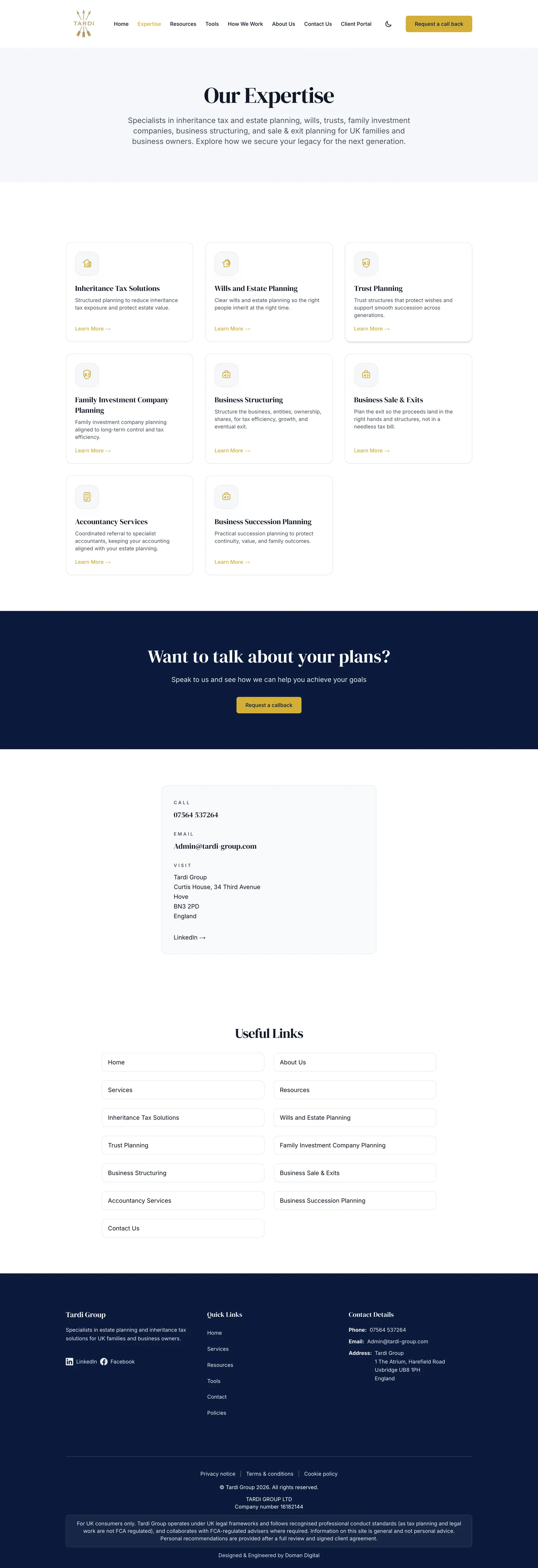
Service pages rebuilt around what prospective clients are actually asking
Before vs After
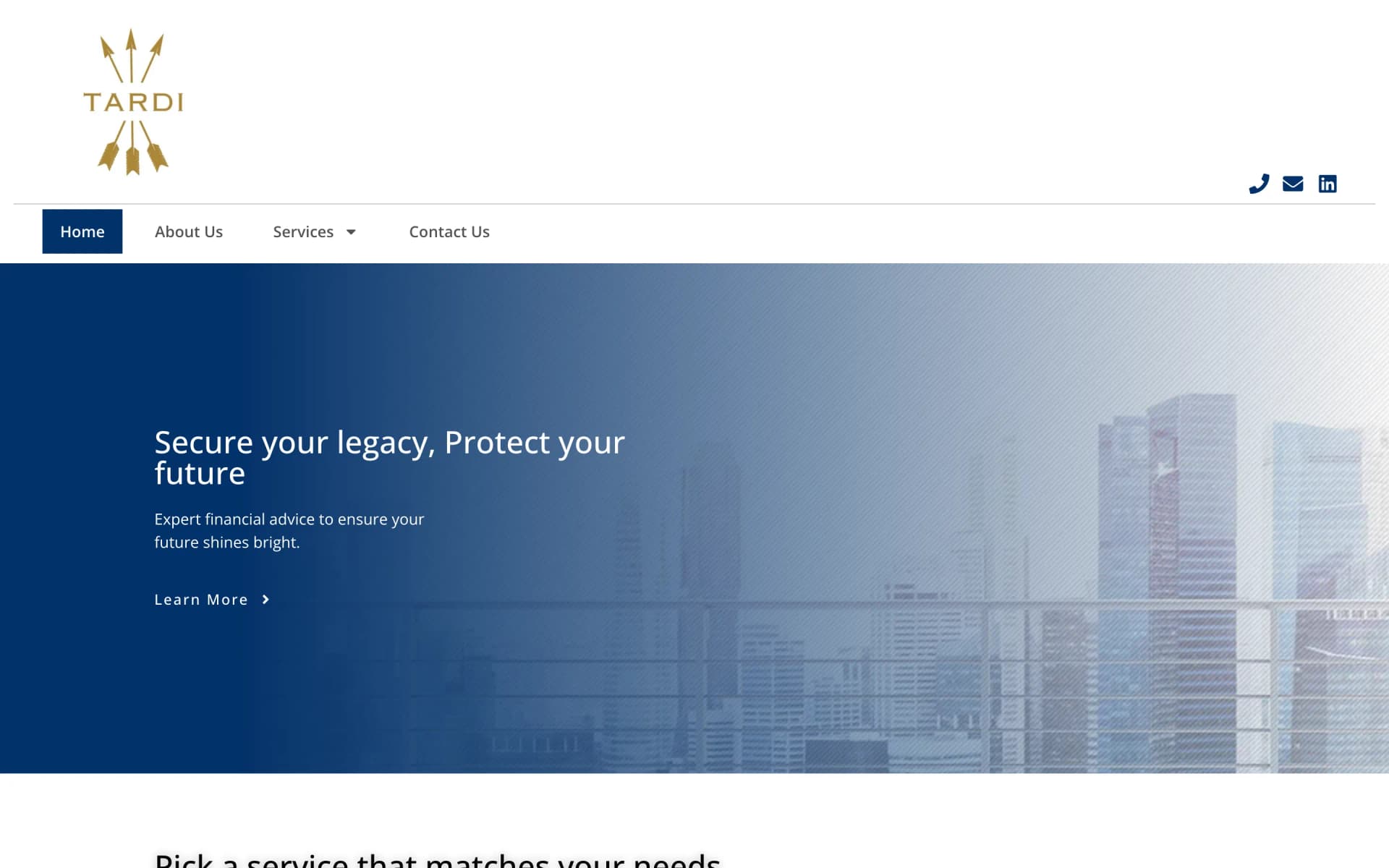
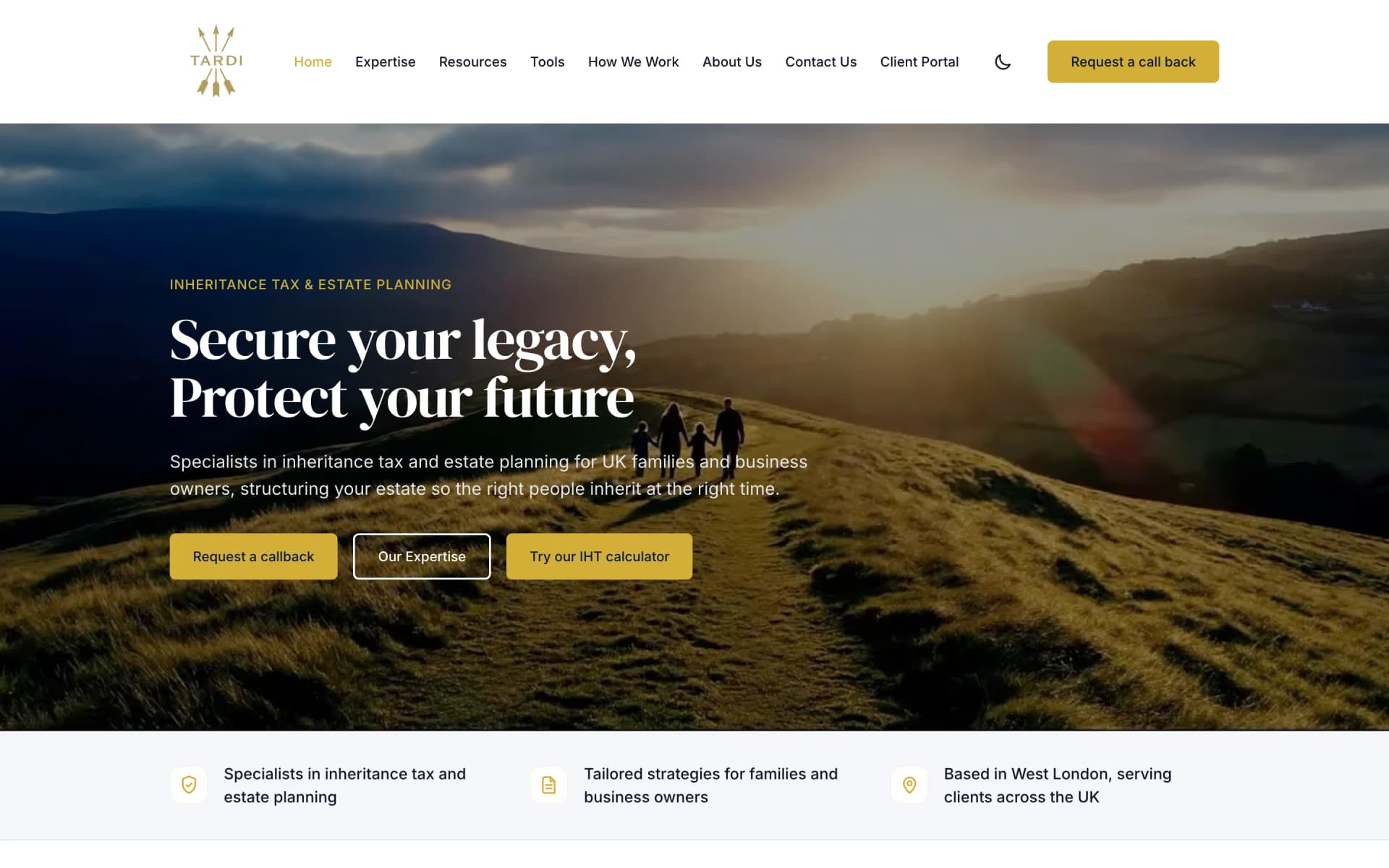
The same three pages, old site on the left, rebuilt site on the right.
Homepage
Services
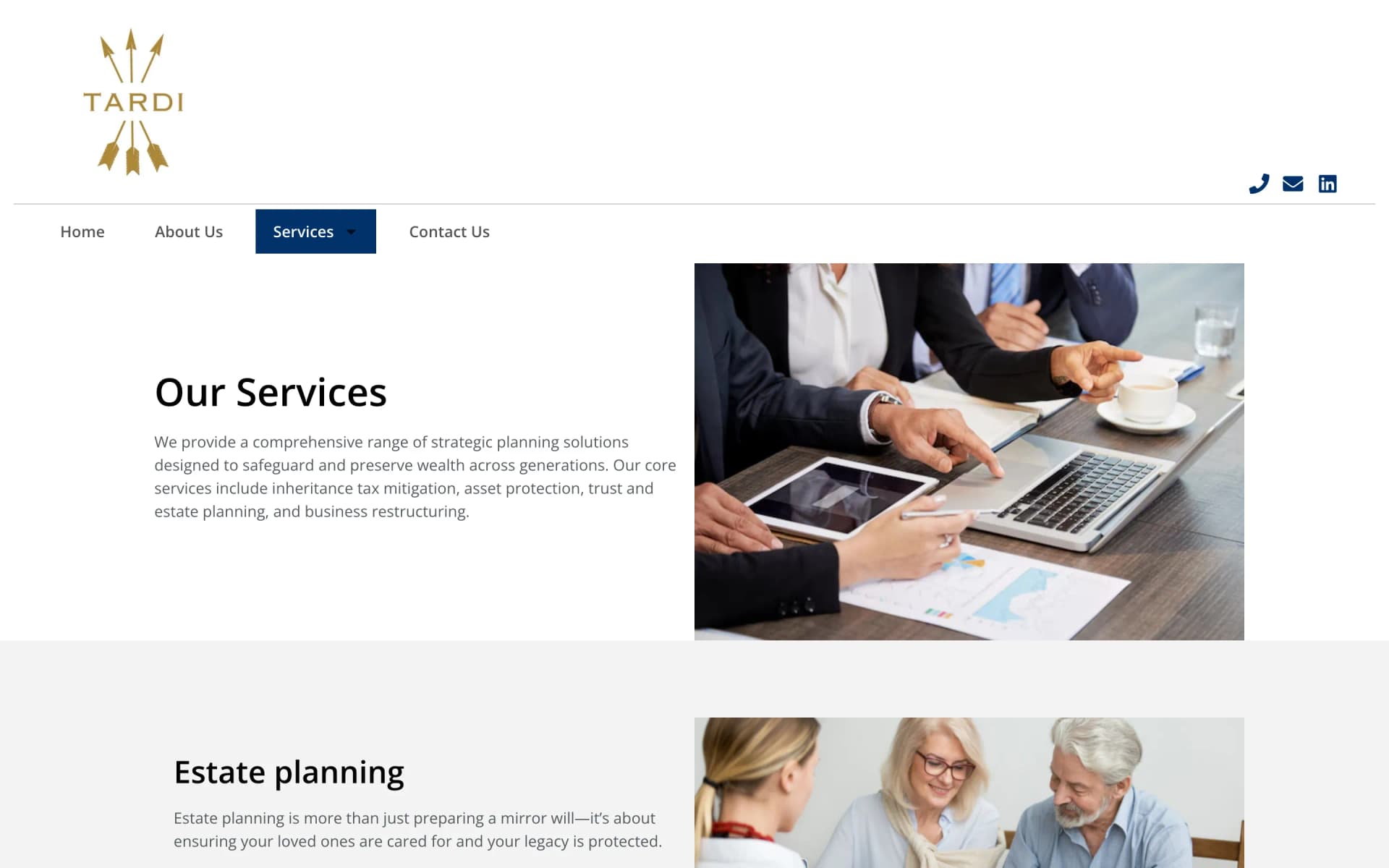
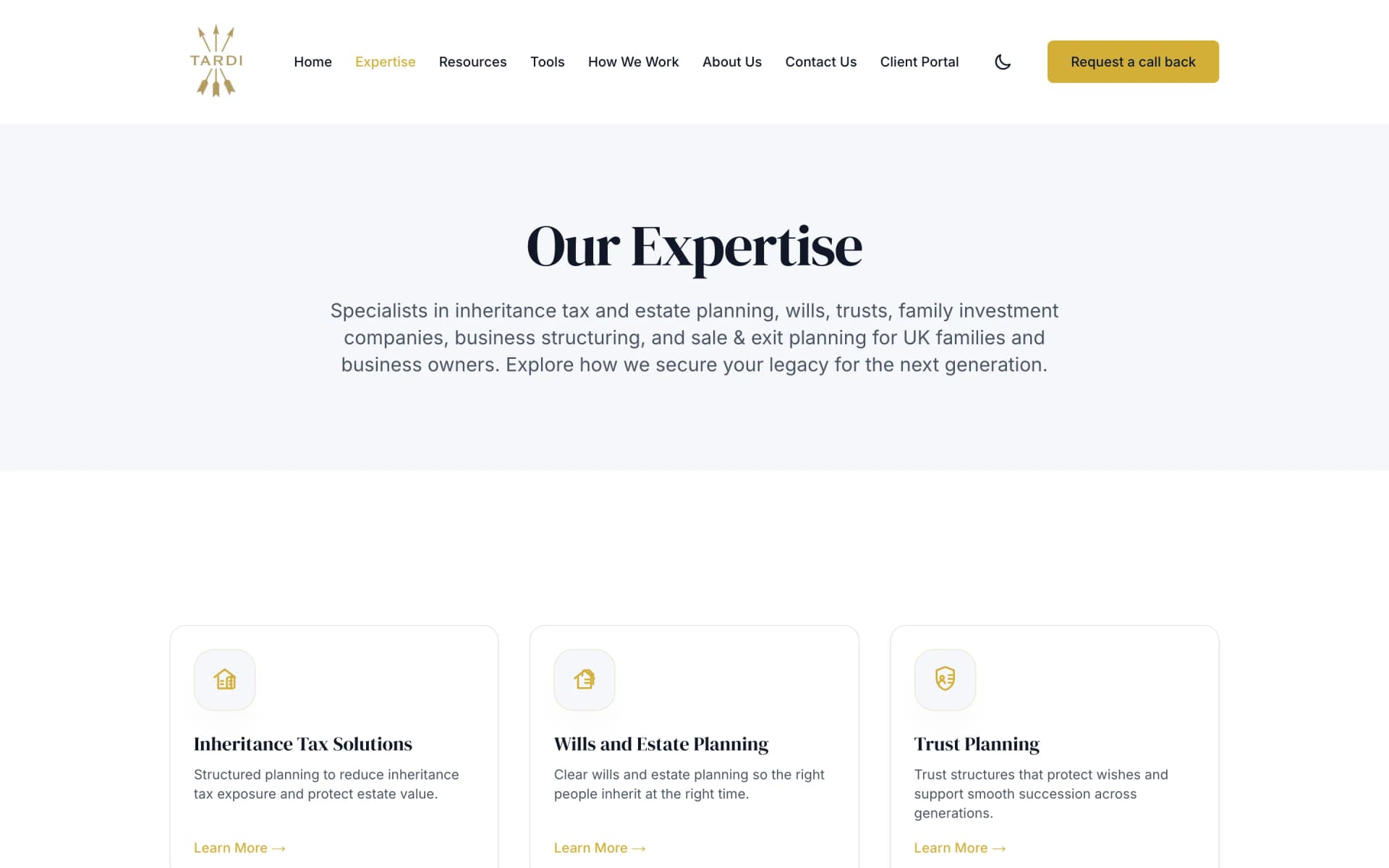
About
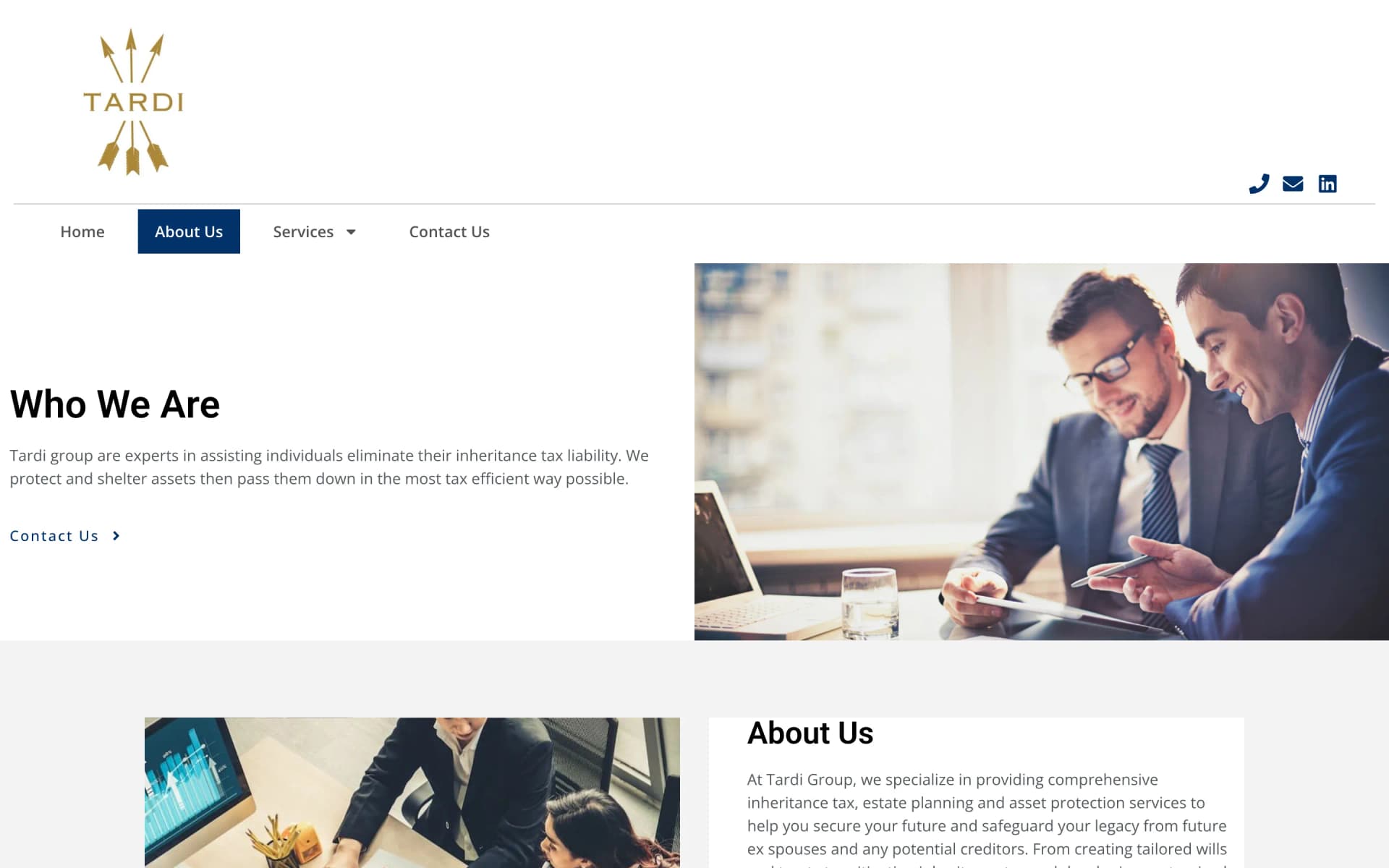
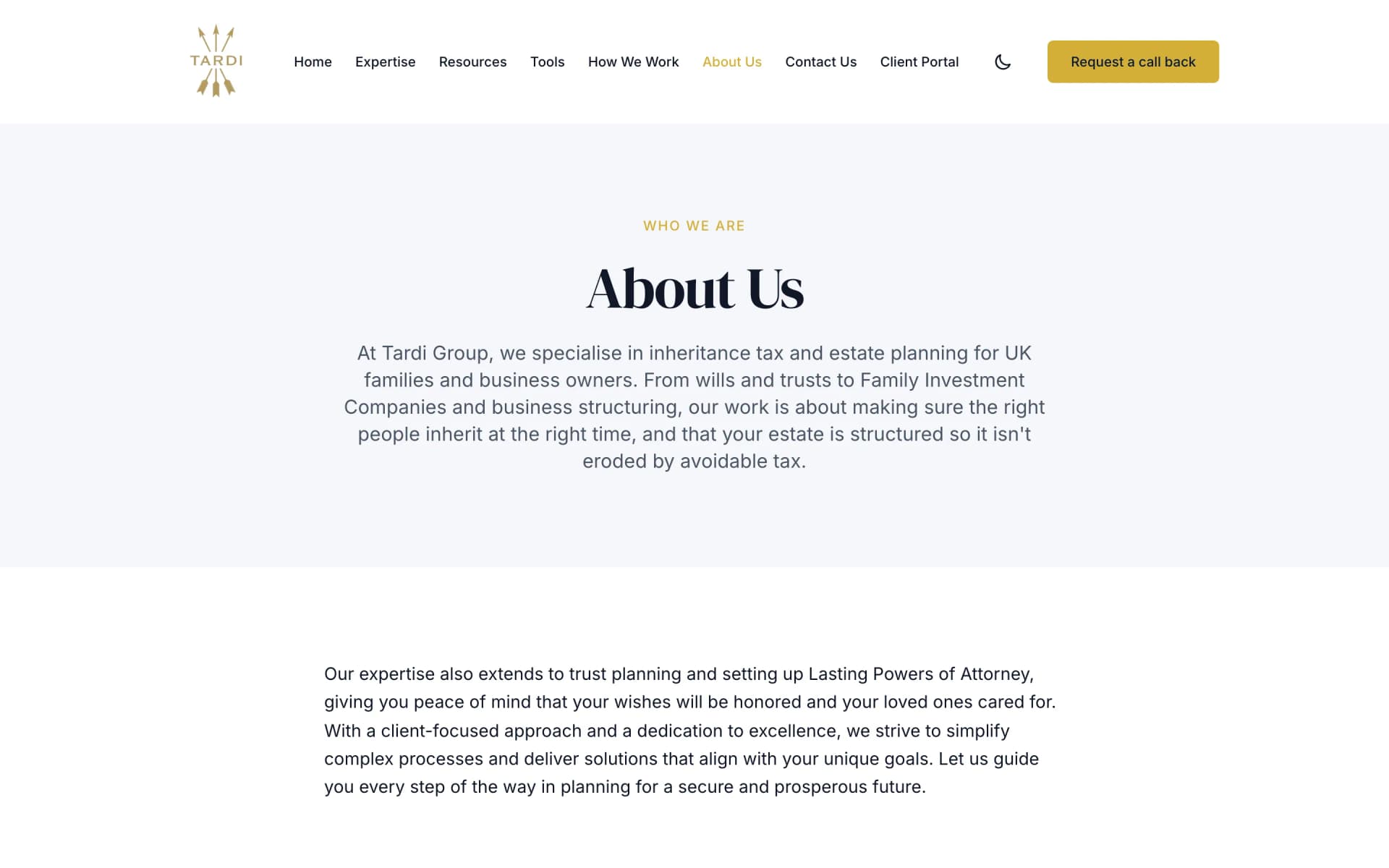
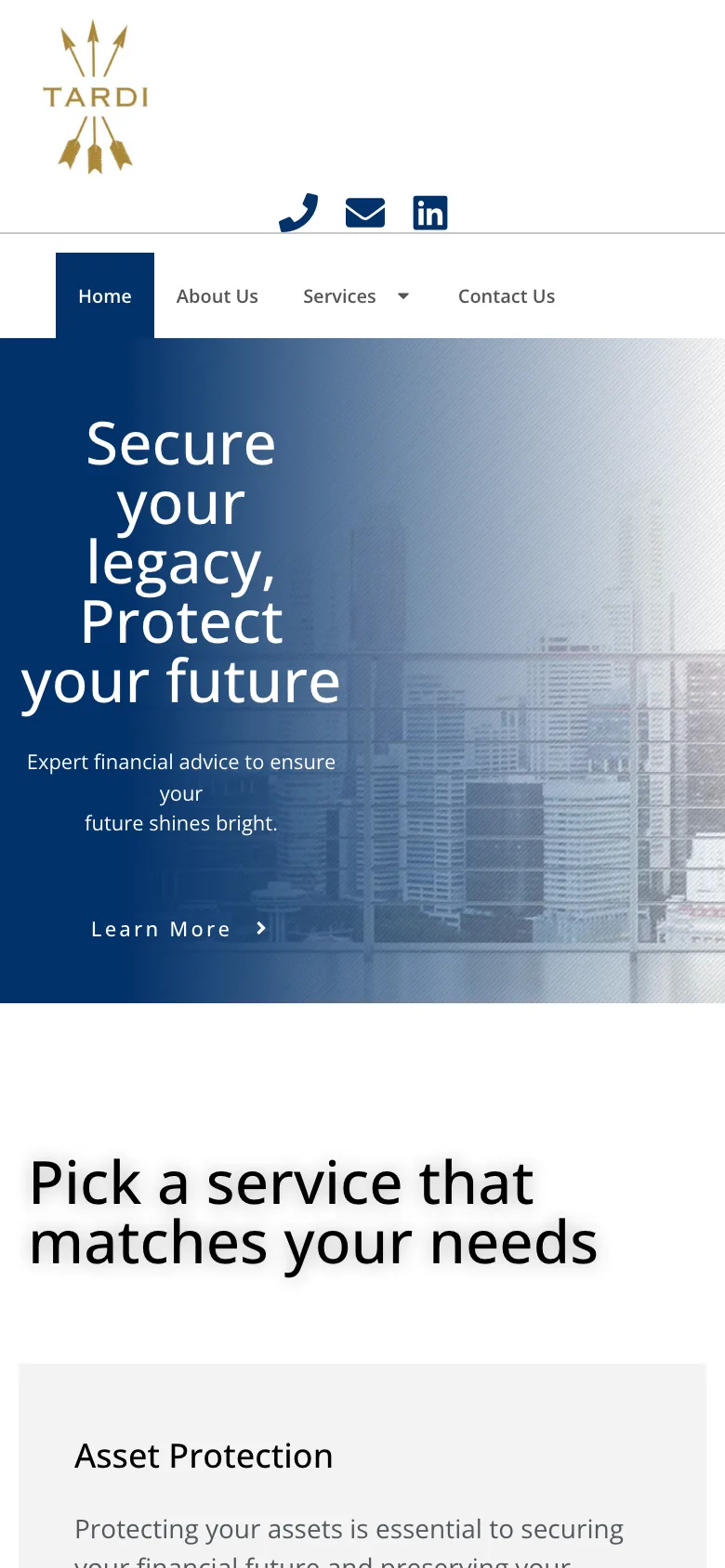
The old site was WordPress running Elementor. On a phone it reflowed the desktop page into a narrower column and left it there: the same stock skyline, the same generic “Expert financial advice to ensure your future shines bright” line, the same five service tiles. Nothing on the page told a visitor that this firm specialises in inheritance tax, who it is for, or what happens next.
The About page was the clearest example of the compliance problem. It opened by saying Tardi Group are experts in assisting individuals “eliminate their inheritance tax liability”: an absolute claim, from a firm that is not FCA-regulated, on the page a prospective client reads to decide whether to trust them. The rebuilt site states the specialisation and the regulatory position plainly instead.
These captures come from a full restore of the original WordPress site, rebuilt from the client’s own backup. The old site is gone from the public internet and was never archived by the Wayback Machine.
The build
The initial rebuild created a fast, structured site aligned with the quality of advice being sold. A second phase extended it into a broader client acquisition and service delivery platform.
Tools and lead capture
The public-facing site includes six calculators and four quizzes covering inheritance tax estimation, pension projection, investment growth, Family Investment Company (FIC) fit assessment, business succession exposure, UK residency and cross-border complexity, estate confidence, and wills and estate planning readiness. Each calculator is a tracked conversion event tied to a measurable lead pipeline, not a disconnected content asset. Submissions feed a multi-step email nurture sequence specific to the tool used.
Six calculators and four quizzes, each connected to a lead pipeline
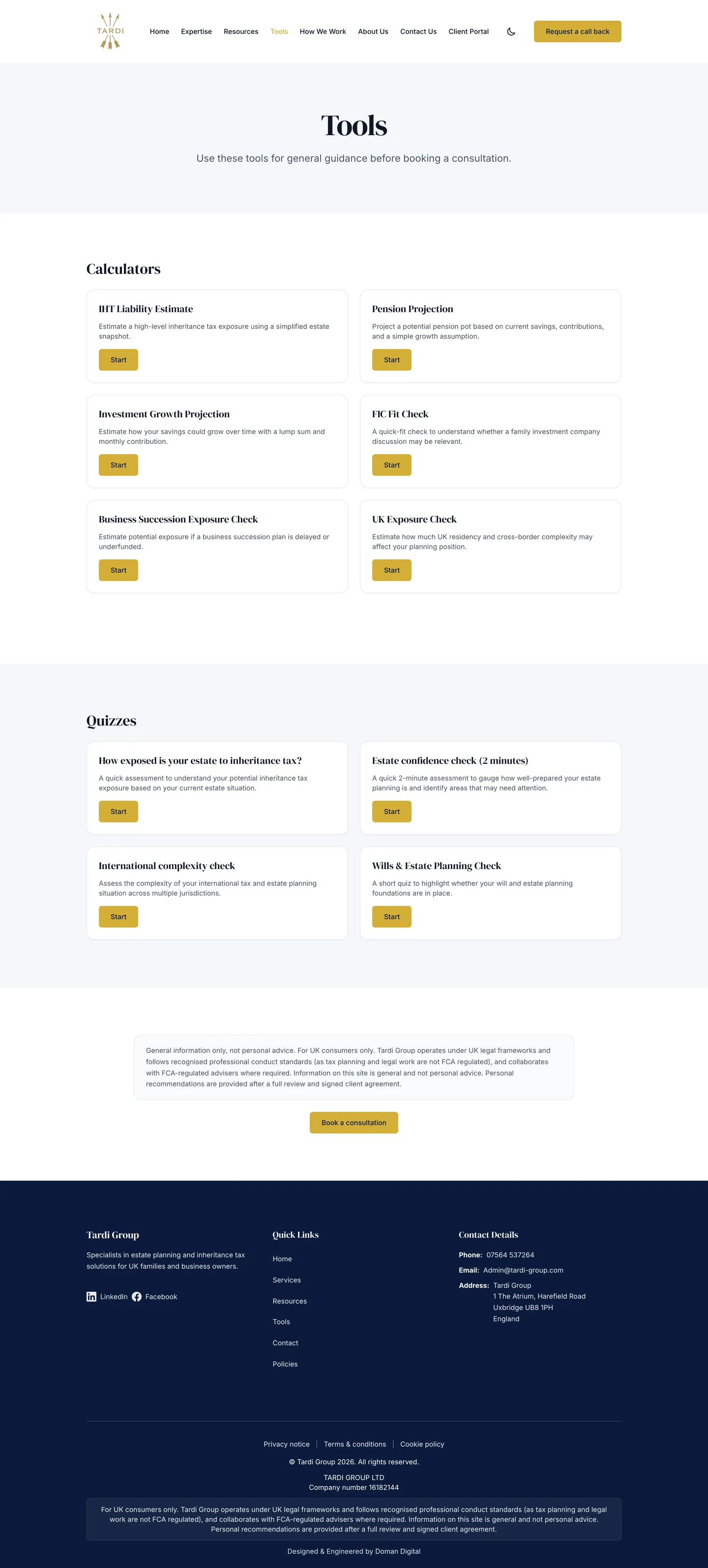
Mobile-first, fully responsive across all tools

Content and SEO
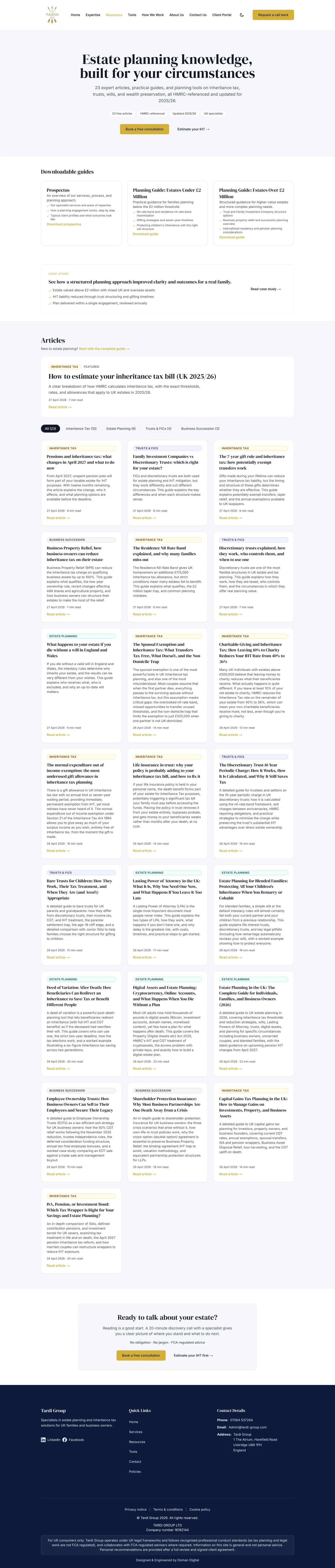
Twenty-three long-form resource articles cover the full range of client questions, from the seven-year gift rule to pension changes in April 2027. Each article is internally linked to relevant services and tools so the content library compounds over time rather than sitting as disconnected pages.
23 long-form articles covering every major client question, built to compound in search
Client portal
A private client portal was built from scratch. Clients sign in to access intake forms, upload documents for admin review, exchange secure messages, track milestones, sign engagement letters digitally, view invoices, and book appointments. Documents go through a quarantine and review workflow before they are accessible. All data is subject to GDPR retention and erasure flows.
A back-office admin layer gives the firm operational visibility across lead management, document requests, invoicing, reporting, activity tracking, and client communication, without a third-party CRM.
AI assistant
An AI concierge operates across three surfaces: the public site, the client portal, and the admin back office. Each has its own role and guardrails. The public assistant surfaces tools, services, and booking. The portal assistant reads the client's own data. The admin assistant is read-only. All three share a single compliance policy that defines exactly where the regulatory line sits and refuses to cross it.
The outcome
Phase one moved Tardi Group off WordPress and onto a fast, structured platform aligned with the quality of the work being sold. Phase two turned it into operational infrastructure.
The firm now has digital systems to manage the full client lifecycle: first Google search through onboarding, case management, and billing, without relying on email threads and shared folders for document exchange.
- 9 in 10 clients do not pay inheritance tax after planning
- £100M+ in assets under planning
- 6 calculators and 4 quizzes, each generating trackable leads
- 23 long-form articles building compounding search presence
- Full client portal replacing ad-hoc document and email workflows
- Sanity CMS giving the team editorial control without developer involvement
Performance
Lighthouse Performance
94
Lighthouse Accessibility
96
See how this could work for your business.
Tech stack
Next.js, TypeScript, Tailwind, Vercel, Sanity CMS, Clerk authentication, Vercel Postgres, Brevo email, Lumin e-signature, Google Calendar, Cloudflare Turnstile, Sentry
Thinking about your firm's digital presence?
If your website is not explaining your expertise, qualifying prospects, or capturing leads, run the free review. It checks the nine things most likely to be costing you enquiries, and tells you which your site has.