Case Study ·Children's occupational therapy
Most OT websites are built by someone who understands websites. Sensphere was built by someone who first understood occupational therapy.
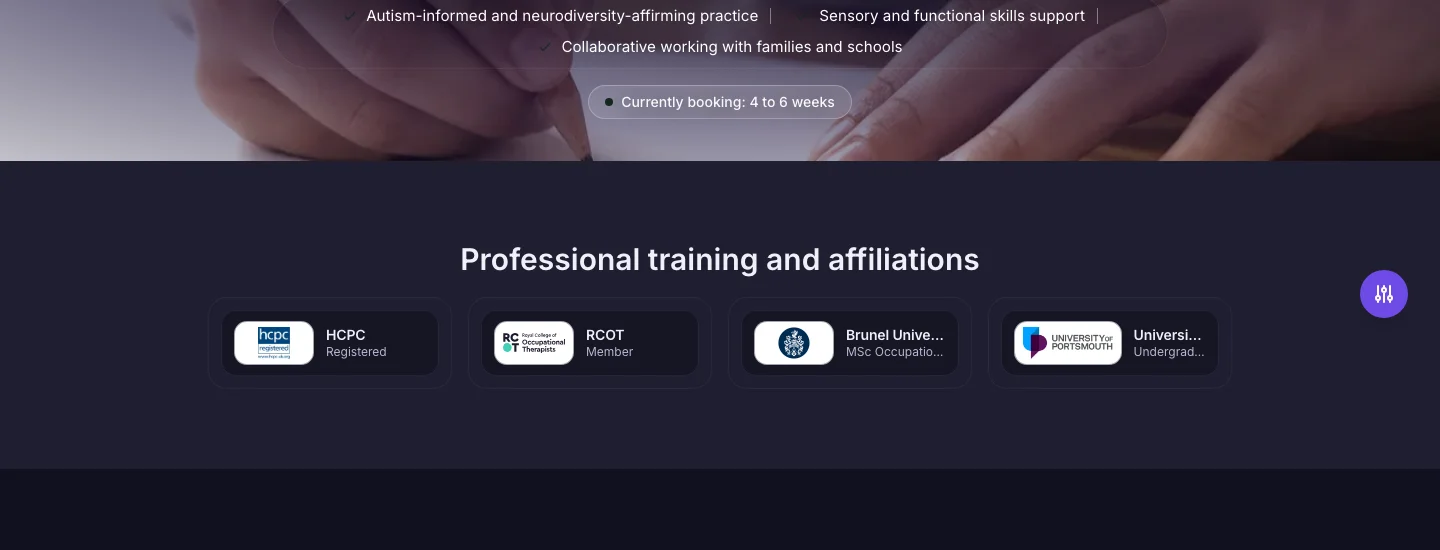
Homepage, trust and professional affiliations
Google rating at launch
5.0
Resource guides published
16
RCOT programme
Referenced
Cherif Larbaoui founded Sensphere to work with children and young people navigating sensory, developmental, and emotional challenges. Before a line of code was written, the build was stress-tested against how families actually search for private OT support.
What do they search for at 11pm after a difficult day? What stops them making contact? What does a parent of a neurodivergent child need to see before they trust a clinician they have never met? Those questions drove every structural decision on the site, from how assessments are explained to how the referral flow is built.
Search for private OT for a child in the UK and most results are a template-builder site with a credential list and a contact form. No pricing. No explanation of what an assessment involves. No resources that show clinical understanding of the conditions families are dealing with. These sites exist because most developers take the brief and build what they are asked for, without asking what the client's clients actually need.
NHS vs Sensphere, the content that caught clinical attention
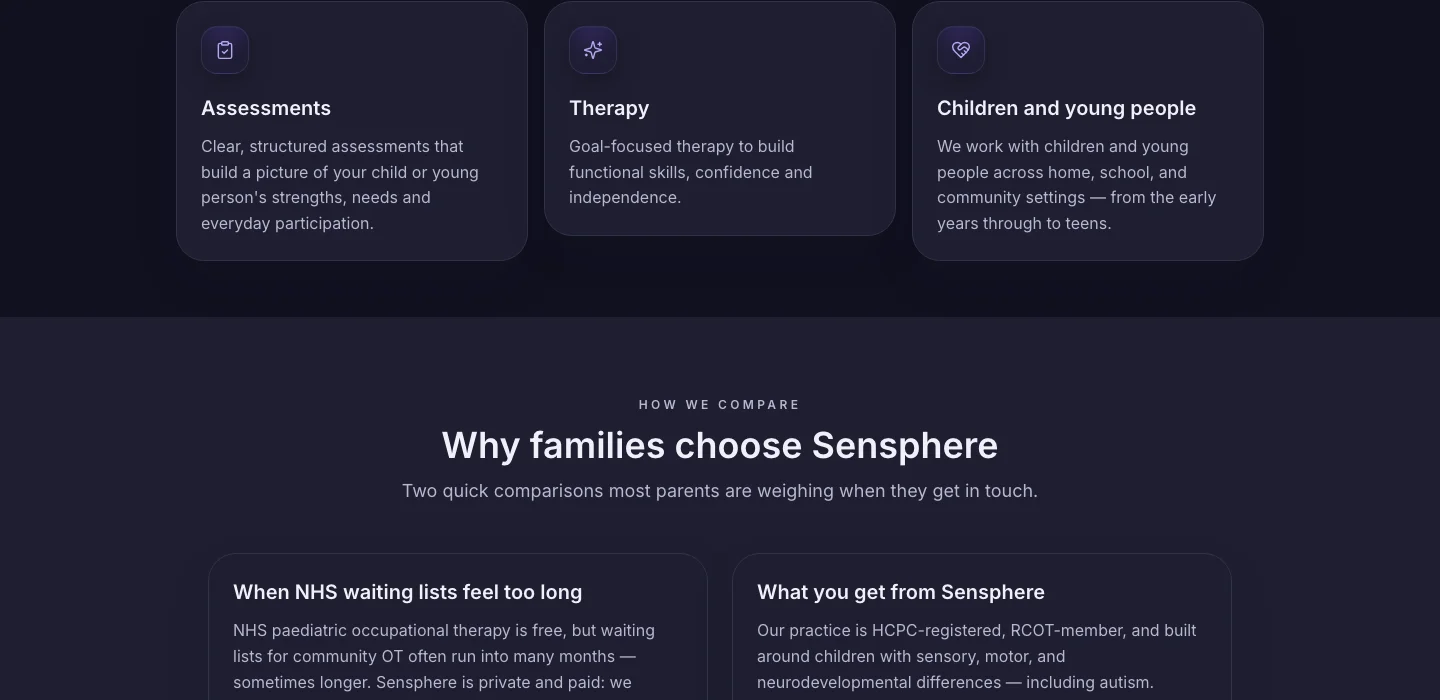
The public site covers services, assessments, therapy, a dedicated page for schools and SENCOs, transparent pricing, and a resources library of 16 guides written for parents, teachers, and clinicians. Each guide is built around the questions families ask before they ever make contact.
Behind the public site is a client portal handling referrals, intake documentation, appointments, documents, invoices, and secure communications. It was built to health-data-adjacent GDPR standards from the start, not retrofitted. Processor agreements cover all 12 third-party services. Documents never expose direct file URLs. Every action that touches personal data generates an audit event.
Cherif can update the site himself. The CMS is embedded in the platform so new resources, copy changes, and clinical profile updates happen without involving a developer.
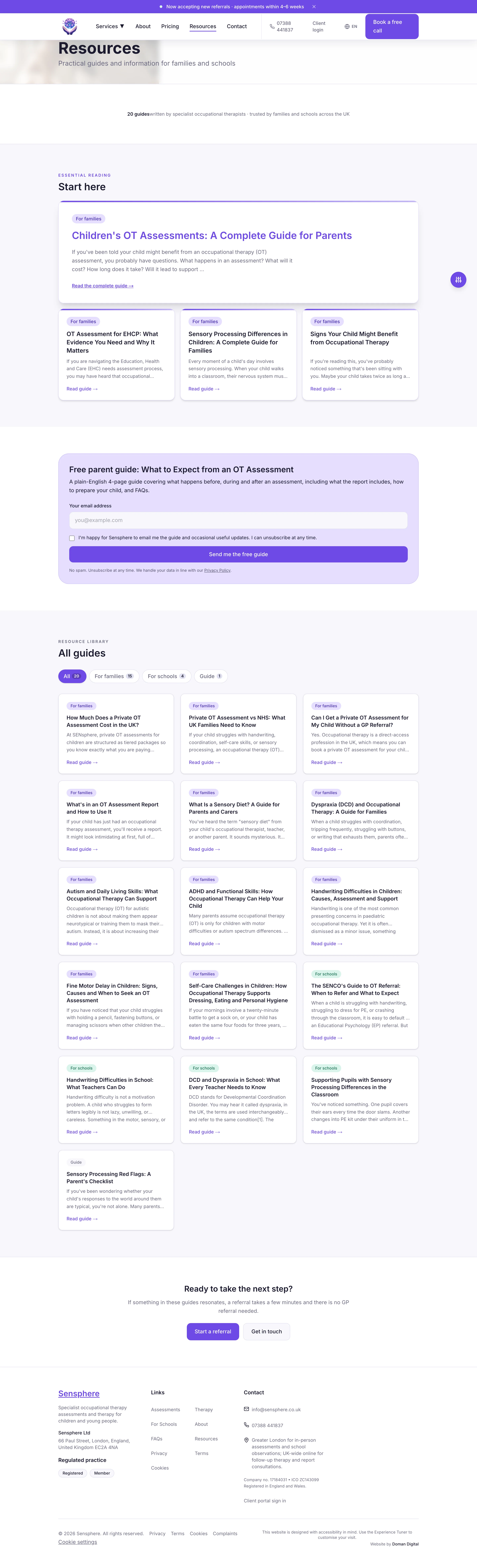
Resources library, 20 guides, filtered by audience
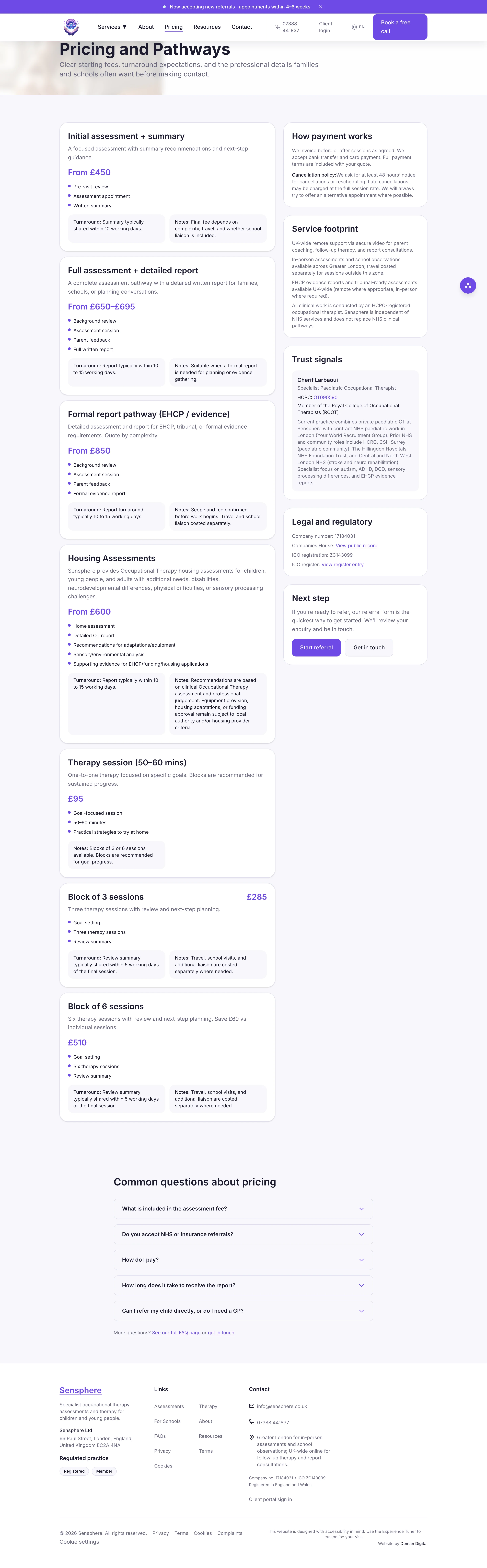
Transparent pricing with compliance sidebar
The portal has a nine-flag compliance gate that blocks clinical data features until every regulatory requirement is signed off. HCPC registration is surfaced correctly on the public site. The portal handles subject access requests, consent flows, and data retention without bolt-on tools.
Playwright accessibility tests run across 144 page and viewport combinations on every deployment. The platform launched with full structured data, 16 indexed resource pages, and a portal handling live referrals from day one.
Assessment pathway, clinical process made visible
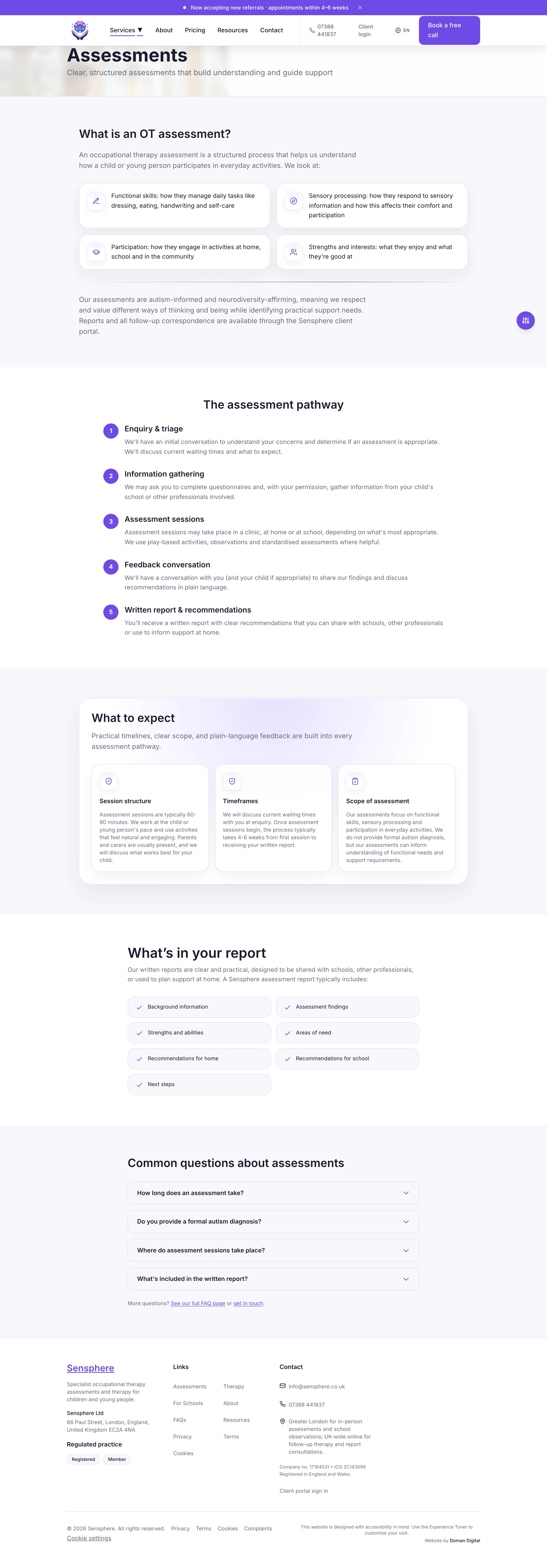
When a Professional Advisor for Independent Practice at the Royal College of Occupational Therapists reviewed the site, she contacted Cherif directly. It was the only private OT practice website she had seen that met the standard she advises members to aim for. The practice is now referenced in RCOT's independent practice programme.
She was specific about why. Most developers take instructions and build what the client wants. What she saw with Sensphere was a developer who researched the sector to produce the best outcome for the client. That is the distinction between a website and a platform that actually works for a clinical practice.
Sensphere launched with a 5.0 Google rating and a live portal handling client referrals from day one.
Mobile, hero to credentials

Mobile, assessment pathway

Built on a modern, fully tested stack with 82 automated tests, structured data across all 16 resource pages, and a four-role authenticated portal covering clients, staff, admin, and editorial access.
The Sanity content architecture was introduced mid-build rather than specified upfront. It works well in the final state, but the integration required rework of page components that had already been built as static. Specifying the full content management scope in week one and building Sanity schemas before page components would have saved several days of rework and produced a cleaner separation between content and presentation from the start.
If you are an occupational therapist, physiotherapist, psychologist, or allied health professional setting up independently, the website you need is not the same as a standard small business site. It needs to handle sensitive data correctly, surface your credentials in the right places, and speak to families under stress in a way that builds trust before they have ever met you.
